


In today’s digital age, computers are ubiquitous. From personal laptops to powerful servers, these machines form the backbone of our modern world. Understanding the key components that make up these marvels of technology is not only fascinating but also empowering. Whether you’re a tech enthusiast, a budding computer scientist, or someone curious about how these machines work, diving into the fundamental components of a computer is an exciting journey.
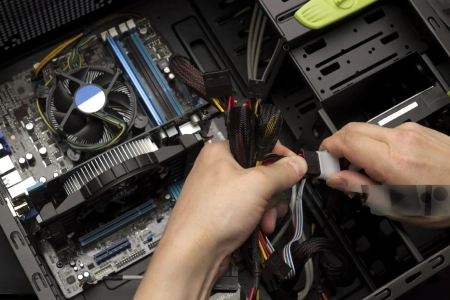
The Central Processing Unit (CPU)
Often referred to as the brain of the computer, the CPU performs the majority of the processing inside the computer. It executes instructions, performs calculations, and manages data movement within the system. With advancements in technology, CPUs have evolved to become faster, more efficient, and capable of handling increasingly complex tasks.
RAM is the short-term memory of a computer. It stores data and instructions that the CPU needs in real-time. Unlike storage drives where data persists even when the computer is turned off, RAM is volatile memory, meaning it loses its contents when the power is cut. The more RAM a computer has, the more smoothly it can multitask and handle demanding applications.
Storage Drives (HDD, SSD, NVMe)
Storage drives are where data is stored long-term. Hard Disk Drives (HDDs) were the traditional storage medium, using spinning disks to read and write data. Solid State Drives (SSDs) and NVMe drives have become more prevalent due to their faster read/write speeds and reliability. They store everything from the operating system to user files and applications.
The motherboard is the backbone that connects all the components of a computer. It houses the CPU, RAM slots, storage connectors, and various other essential parts. It also contains interfaces like USB, HDMI, and Ethernet ports, allowing communication between different devices.
Graphics Processing Unit (GPU)
While CPUs handle general-purpose tasks, GPUs specialize in rendering graphics and performing parallel computations. They are crucial for gaming, graphic design, video editing, and other visually intensive tasks. Modern GPUs are highly specialized and powerful, capable of handling complex calculations efficiently.
Power Supply Unit (PSU)
Often overlooked, the PSU provides the necessary electrical power to all components of the computer. It converts electricity from an outlet into usable power for the computer’s operation.
Cooling Systems
As computers generate heat during operation, cooling systems such as fans, heat sinks, and liquid cooling solutions are vital to prevent overheating and ensure optimal performance and longevity of the components.
Understanding the key components of a computer provides a foundational knowledge that is invaluable in today’s tech-driven world. As technology advances, these components continue to evolve, becoming more powerful, efficient, and compact.
Whether you’re a casual user or an aspiring computer technician, grasping the inner workings of computers can help you make informed decisions when purchasing or upgrading your system. It also lays the groundwork for exploring more advanced topics in computer science and technology. Embrace the ever-evolving world of computers, and let your curiosity drive you to explore the endless possibilities they offer!